Jamaica Not in Recession as Post-Melissa Recovery Gains Ground — PIOJ

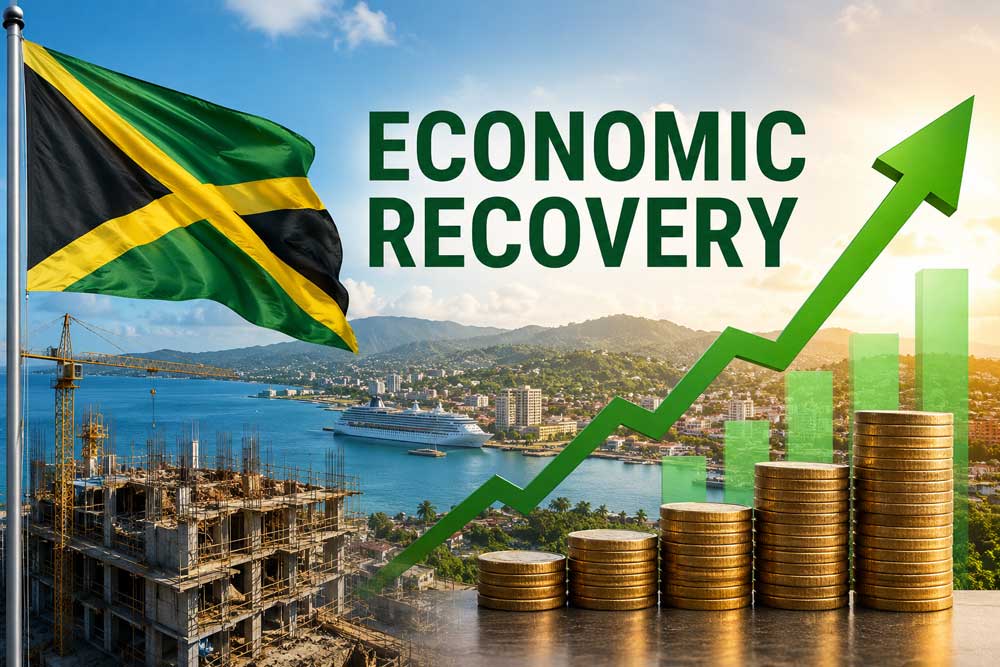
The Planning Institute of Jamaica (PIOJ) says the country is not in a recession despite the economy recording a third straight quarter of year-on-year contraction.
Senior Director of the PIOJ’s Economic Planning and Research Division, James Stewart, said the institute’s assessment is based on the direction of economic activity from one quarter to the next. He also indicated that a recession is not expected during the remainder of the year.
Seasonally adjusted figures show real value added increased by 3.3 per cent in January-March 2026 when compared with the October-December 2025 quarter, when Hurricane Melissa dealt a major blow to economic activity.
The latest estimates nevertheless show that output remained below year-earlier levels. Real gross domestic product (GDP) is estimated to have fallen 2.9 per cent in April-June 2026 compared with the same quarter of 2025.
That decline was considerably smaller than the 7.1 per cent year-on-year contraction recorded in October-December 2025 and the 4.1 per cent fall registered during January-March 2026.
The goods-producing industry was among the areas experiencing significant weakness during the latest review period, declining by an estimated 6.4 per cent.
Agriculture was particularly hard hit, with output falling 17 per cent. Damage caused by Hurricane Melissa in major farming parishes was worsened by drought linked to the El Niño phenomenon. Mining and quarrying was also among the key industries recording significant contractions.
According to the PIOJ, economic activity during April-June continued to reflect the after-effects of the hurricane, including disruptions to production and employment as well as weaker domestic demand and reduced confidence among businesses and consumers.
Despite those challenges, the pace of Jamaica’s recovery has prompted the agency to bring forward its expectations for when economic output could return to its pre-Melissa level.
PIOJ Director General Dr Wayne Henry said the current path suggests that level could be restored within approximately 18 months to two years after the hurricane. That would place a possible return as early as the April-June quarter of 2027.
The previous assessment had pointed to a roughly three-year recovery period extending into fiscal year 2028/29.
Regaining the lost level of economic output, however, would not mean that all hurricane damage had been repaired. Henry said the wider rebuilding process — including restoring homes, infrastructure and livelihoods — could require between three and five years.
The scale of the initial setback is reflected in the sharp change late last year. Jamaica had recorded three consecutive quarters of quarter-on-quarter economic growth during the first nine months of 2025 before Melissa interrupted that expansion.
In October-December 2025, real value added plunged 7.3 per cent from the July-September quarter as the hurricane disrupted the economy. The subsequent 3.3 per cent quarter-on-quarter increase in January-March 2026 was cited by Henry as evidence that activity had started recovering from that shock.
Remember to share this article on Facebook and other Social Media Platforms. To submit your own articles or to advertise with us please send us an EMAIL at: [email protected]


Post Comment